
How to Avoid Fake Products and Hidden Prices When Shopping in Lagos Markets
Lagos Markets · 2 Oct 2026 · 10 min read
Shopping in Lagos markets gives you access to almost everything, often at prices you won't find elsewhere. But the sheer number of sellers and products can also make it difficult to know exactly what you're buying and whether you're getting the price you expected.
That concern has received renewed attention in 2026. The Lagos State Consumer Protection Agency (LASCOPA) has warned businesses against deceptive pricing, false promotions, and the sale of counterfeit, substandard, and expired products. The Federal Competition and Consumer Protection Commission (FCCPC) has also highlighted problems with misleading or incomplete product labelling and advised consumers to examine product information carefully before buying.
Here's how to protect yourself, with the specific red flags and not just the general advice.
1. Know the price before you go
Research what the same or equivalent product is selling for from different businesses before you travel. This gives you a realistic price range and makes it easier to recognize an unusually high or suspiciously low offer.
LASCOPA has warned consumers about bait advertising, an attractive price used to pull customers in, only for the advertised product to be declared "just finished" or "not this one, but I have something similar" once you arrive. If a seller pivots you away from the exact item you came for, that's your cue to ask why, not to simply accept the alternative.
2. Know who you're buying from, and watch for the approach
In a large market, the person who approaches you on the street isn't necessarily the business you intended to visit. This is especially common around market entrances, where runners and touts intercept shoppers before they reach the actual stores, offering to "show you the shop" or claiming to sell on behalf of a vendor you can't see.
For expensive purchases, identify the actual store beforehand:
- Store name and physical location (not just a stall number someone tells you verbally)
- Products sold
- Contact information
- Reviews or shopper feedback
- Whether the business has been physically verified
If someone approaches you before you reach your intended store, don't assume they represent that business. If they claim to be taking you to a particular seller, verify the store name, location, and contact details yourself before handing over money.
3. Inspect the product, and know the specific verification steps for what you're buying
A genuine-looking shop doesn't automatically mean every product inside it is genuine, and "it looks okay" isn't the same as "it checks out." The general advice to "inspect the product" only helps if you know what to actually do with your hands and your phone. Here's the process for four categories where verification works very differently.
Laptops: confirm the specs you're paying for actually match the machine
A seller advertising "16GB RAM, 512GB SSD" doesn't mean the laptop in front of you has that, so ask them to let you check it yourself, on the machine, before you pay:
- On Windows: Open Settings → System → About. This shows installed RAM directly. For a second confirmation (and to see storage), open File Explorer and click "This PC," which lists the actual drive capacity. Task Manager (Ctrl+Shift+Esc) → Performance tab also shows RAM in use and the number of memory slots occupied, which is useful if a seller claims "upgradeable" RAM.
- On Mac: Click the Apple menu → About This Mac, which shows the chip, memory, and storage directly.
- Processor and generation: The "About" screen also shows the processor model, so cross-check that exact model number online rather than trusting a generation number quoted verbally, since "Core i5" alone doesn't tell you which generation you're getting, and older generations are often sold as newer ones.
If the numbers on screen don't match what was advertised, that's your cue to renegotiate the price or walk away, not to assume it's a minor mix-up.
iPhones: check activation status and coverage before you hand over cash
Before paying for a used or UK-used iPhone:
- Check the model and storage directly on the device: Settings → General → About.
- Confirm Activation Lock is off. Ask the seller to sign out of their Apple ID in front of you (Settings → [their name] → Sign Out), and confirm Find My shows the device as unlinked. A phone still tied to someone else's Apple ID can lock you out entirely after purchase.
- Run the serial number through Apple's own Check Coverage page (checkcoverage.apple.com): enter the serial number (found in Settings → General → About, or by dialing *#06# for the IMEI), and it will show you the model, coverage status, and whether the unit is still within Apple's warranty window. A "serial number not found" or mismatched model result is a red flag worth stopping over.
- Check battery health: Settings → Battery → Battery Health & Charging. A battery health well below 85% on a phone sold as barely used is worth factoring into your price.
- Watch for parts warnings. If the phone shows a message about being unable to verify a genuine Apple battery, screen, or camera, that indicates a non-Apple replacement part was fitted. That's not necessarily a dealbreaker, but it's something to know and negotiate on, not discover later.
It's also worth knowing that the Nigerian Communications Commission has been rolling out a Device Management System built around a central IMEI registry, designed to flag devices that are fake, cloned, or reported stolen, a sign that IMEI checks are becoming more, not less, important when buying a phone in Nigeria.
Cosmetics: verify the registration, don't just read it
Any cosmetic legally sold in Nigeria should carry a NAFDAC registration number, but a number printed on a box means nothing on its own, since it can simply be copied from a genuine product. Verify it instead:
- Go to registration.nafdac.gov.ng, use the "Verify Products" option, and enter the NAFDAC registration number printed on the product.
- Alternatively, use the NAFDAC Greenbook, NAFDAC's online tool for checking whether a product is registered by searching the product name, brand, or registration number.
- If the number doesn't return a match, returns a different product name, or the brand on the box doesn't match what comes back, treat that as a genuine red flag rather than a formality. It's not a guarantee of counterfeiting, but it's a real reason to ask the seller to explain the mismatch before you buy.
Food products: the same registry, a different thing to check
Food products go through the same NAFDAC registration system as cosmetics, so the verification steps are identical: check the registration number against registration.nafdac.gov.ng or the Greenbook. What's different is what else to physically check on packaged food, including the expiry or "best before" date, whether the batch number on the pack is legible (a missing or scratched-off batch number is a common sign of relabeled or expired stock), and whether the seal is genuinely intact rather than re-glued.
Fashion and accessories
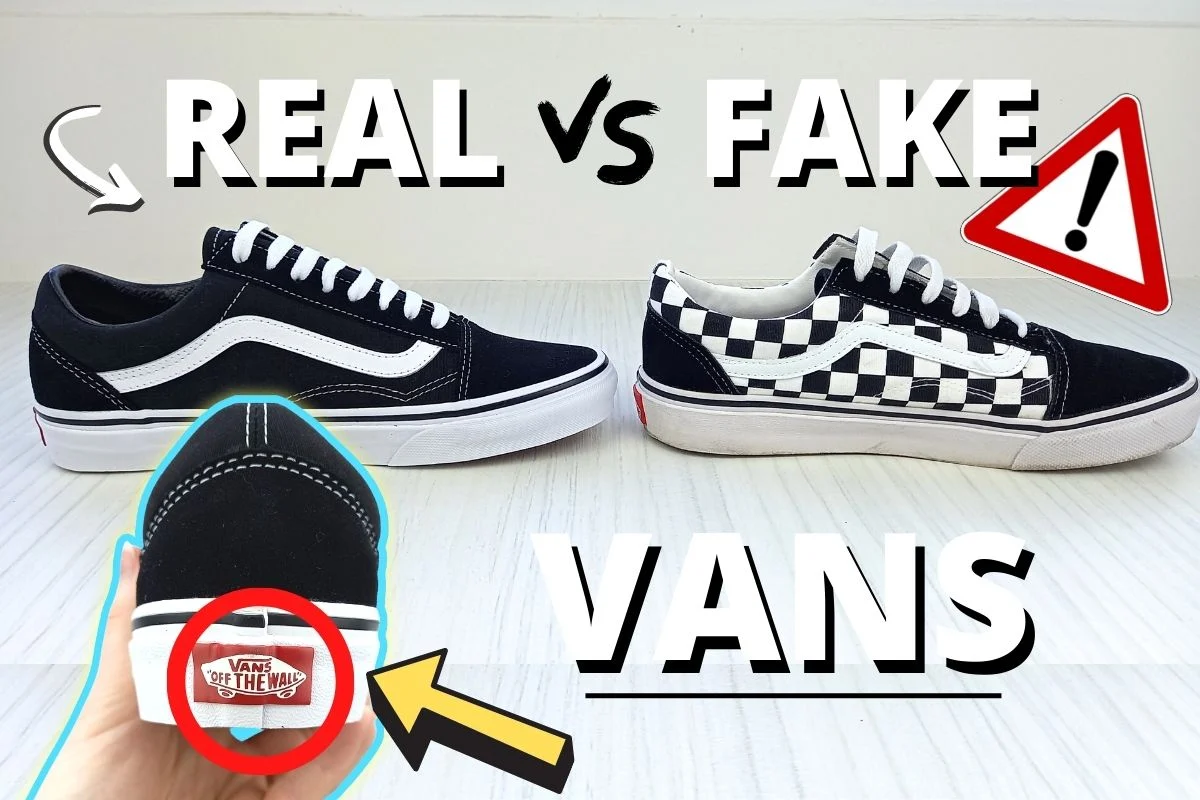
Stitching consistency, labeling (spelling, font, logo placement), and materials are the usual tells for counterfeit branded goods. There's no central registry to check against here, so this category relies more on careful physical inspection than the others.
The FCCPC advises consumers to avoid goods with missing, illegible, altered, or misleading labels, and across all of these categories, an unwillingness to let you run these checks yourself is itself a signal.
4. Test expensive products before paying, and don't let anyone rush that
The checks in section 3 only work if you're actually allowed to run them, on the device, before money changes hands. For appliances and other electronics without a dedicated registry to check against, the same principle applies: confirm the model and specs, inspect physical condition, test every function that matters to you, and check what warranty is included.
If a seller discourages testing, saying "it's fine, I've checked it already," or rushes you past this step, treat that as information, not just an inconvenience. A seller confident in their product has no reason to avoid letting you run these checks yourself.
5. Confirm the final price, and how you're expected to pay
Sometimes the problem isn't a fake product, but an unclear transaction. Before handing over money, confirm the final price and exactly what you're getting for it, including accessories, installation, or delivery fees that could change the total.
Payment method matters too. Transfers and POS payments are now the norm in most Lagos markets, but they come with their own risks: confirm the account name matches the business (not a personal name unrelated to the shop) before transferring, and get confirmation of payment received before you leave with the product or before the seller steps away with your money. For larger purchases, avoid being rushed into a transfer "to hold your place" before you've inspected what you're buying.
Regulators in Lagos have been emphasizing clearer price information. At a July 2026 stakeholder engagement, the FCCPC and LASCOPA highlighted the importance of price tags, product labelling and businesses' consumer obligations.
6. Understand the warranty and return policy, and get it in writing
A product that looks like a bargain can become expensive if it develops a fault shortly after purchase. Before paying, ask:
- Is there a warranty, and how long does it last?
- What does it cover, and what voids it?
- Can the product be returned, and within what window?
- Who handles repairs, the shop or the manufacturer?
A verbal warranty promise is only as good as your ability to prove it was made. Ask for it written on the receipt, or get the seller's direct contact details so you have a way to follow up if something goes wrong. Also, don't assume “no refund” means you have no rights. A seller's sign saying “No refund after payment” does not automatically override statutory consumer protections. If the product is defective, unsafe, unsuitable for its intended purpose, or not as described, the circumstances may give you rights to a remedy such as repair, replacement, or refund.
7. Negotiate, but don't let urgency do the deciding for you
Haggling is a normal part of shopping in Lagos markets, and it's not the same thing as being rushed. The two often get blurred: a seller quoting a high opening price and then pressuring you to decide "now" before the price "goes back up" is a tactic, not a real deadline.
You're allowed to take your time, compare your options, and walk away, even mid-negotiation, if something doesn't feel right. Nothing about a good deal requires an instant decision.
8. Do your research, and check verification, before you enter the market
You don't have to wait until you're physically inside the market to start. Platforms such as Lagos Markets let you discover businesses and products before making the trip, so you arrive knowing where you're headed instead of relying on whoever approaches you first.
On Lagos Markets, some stores have also gone through a physical verification process, giving you an extra signal that there's an identifiable, real business behind the listing. It's worth being clear about what that does and doesn't mean: verification confirms the business exists where it says it does, but it is not a guarantee that every product it sells is genuine. Your product-level checks from sections 3 and 4 still apply regardless of verification status.
9. Keep your purchase records
For anything expensive, keep the documentation tied to the transaction: receipt or invoice, warranty information, the seller's contact details, order details, and the product's model or serial number.
Lagos consumer authorities have advised consumers to retain receipts, invoices, warranties, and similar documentation when reporting unfair business practices. These records are your evidence if there's a dispute later, since a verbal promise rarely holds up on its own.
A simple checklist before buying
Before you pay, ask yourself:
- Do I know the normal price for this product?
- Do I know exactly what I'm buying, with model, batch, or specs confirmed and not assumed?
- Have I identified the seller and location myself, rather than following whoever approached me?
- Have I inspected or tested the product using the checks specific to its category?
- Do I understand the final price, the payment method, and the warranty terms?
- Will I receive a receipt or other purchase record?
If the answer to any important question is no, take a little more time before paying.
The bottom line
Shopping in Lagos doesn't have to mean choosing between overpaying and taking unnecessary risks. The best protection is specific, not general. It means knowing the actual red flags for what you're buying, not just the broad idea that fakes exist.
Research the product before you leave home, identify the business you want to visit, check the product against the red flags for its category, confirm payment and warranty terms clearly, and keep your records.
And if you're using Lagos Markets, you can start that process before you enter the market: discover businesses, explore available products, and identify stores you may want to visit before making the trip.
Comments
Sign in to join the conversation.